
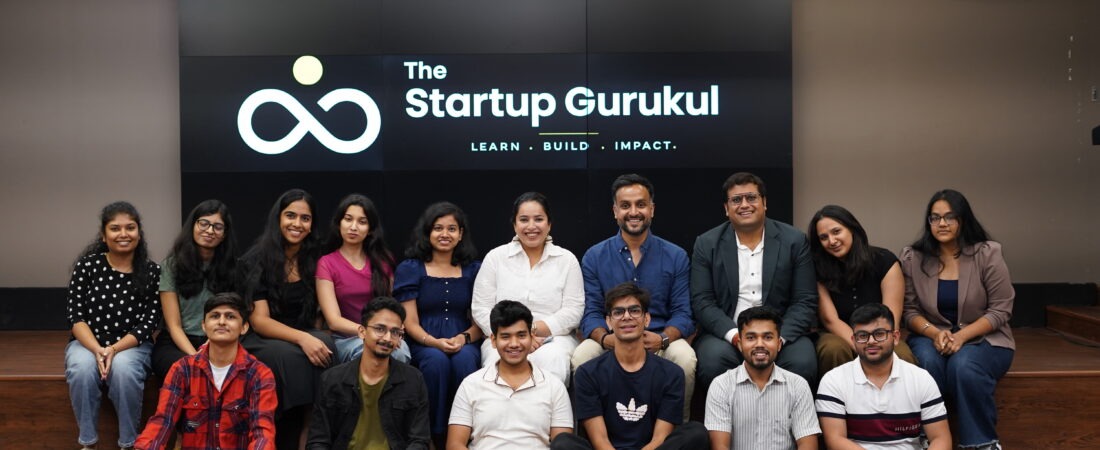
LEARN . BUILD . IMPACT.
Top Startup Schools in India: What They Actually Teach (And Why Most Founders Still Get Stuck)
If you’ve searched for the “top startup schools in India,” chances are you’re not looking for another lecture-heavy course. You’ve probably already sat through business school theory, YouTube tutorials, or a bootcamp that promised a lot and delivered a certificate. What you actually need is somewhere that gets you building – and selling – a real business.
That’s the gap The Startup Gurukul was built to close.
Why “Startup Schools” Exist in the First Place
Most colleges teach business in theory: case studies, frameworks, exams. Very few put you in a room where you have to find a real customer, sell a real product, and handle a real rejection before lunch.
The founders behind The Startup Gurukul saw this gap first-hand. Before the company existed, its founder was already mentoring 100+ early-stage founders one-on-one – and noticed the same pattern over and over: smart, motivated people getting stuck at the exact same stages. Not because they lacked ideas, but because no one was walking with them through validation, sales, distribution, and fundraising in a hands-on way.
That pattern is what turned into a company.
What Separates a Good Startup School From a Course
If you’re evaluating options – whether you’re a student exploring entrepreneurship, an early-stage founder trying to scale, or someone with a business already running that needs to go from 1 to 100 – here’s what actually matters:
1. Execution over theory. A strong programme has you validating an idea, sourcing a product, building a website, running ads, and closing a real sale – not just discussing frameworks.
2. Operators, not just professors. You want people who’ve built and sold, not people who’ve only taught. Programmes led by founders who’ve mentored 100+ other founders bring pattern recognition theory can’t replicate.
3. Structure with real deadlines. The best format is intensive and time-boxed – a 30-day sprint from Foundations to Build & Validate to Sell & Execute to Pitch – so momentum doesn’t die in week two.
4. Peer accountability. Founders learn fastest from other founders in the room, not just from the front of it.
5. A portfolio, not a participation certificate. By the end, you should have something to show – a validated idea, a live website, real sales conversations – not just a slide deck of what you learned.
How The Startup Gurukul Fits In
The Startup Gurukul runs founder-first programmes designed to complement – not replace – what you’re already learning in college or in your career. Two flagship tracks:
- Industry Readiness Accelerator – a 30-day, execution-focused bootcamp where you build an end-to-end business from scratch: validating an idea, sourcing product, building a website, running Meta ads, and making real sales. Built for students chasing entrepreneurship and for those who want to walk into a job already hiring-ready.
- Career Acceleration Lab – a 10-week programme built around the same execution-first philosophy, aimed at accelerating career readiness through real project work rather than classroom simulation.
Both are led by operators who’ve mentored founders directly – not adapted from a generic curriculum.
Who Should Be Looking at Startup Schools Right Now
- You have an idea but no execution experience. You need structure, deadlines, and someone who’s done it before.
- You’re already running something and stuck below a certain revenue or growth ceiling. You need to go from 1 to 100, not 0 to 1.
- You’re in college and want a real alternative to placements. You want a portfolio of actual outcomes, not another internship line on a resume.
“Top startup school” isn’t really a ranking – it’s a filter. The right one for you is the one that gets you building in week one, puts you in front of real mentors who’ve done it, and ends with something tangible: a business, a portfolio, or a skill set you couldn’t have built in a classroom.
If that’s what you’re looking for, The Startup Gurukul runs exactly that kind of programme – learn, build, impact, in that order.
Tagline: LEARN . BUILD . IMPACT.
